

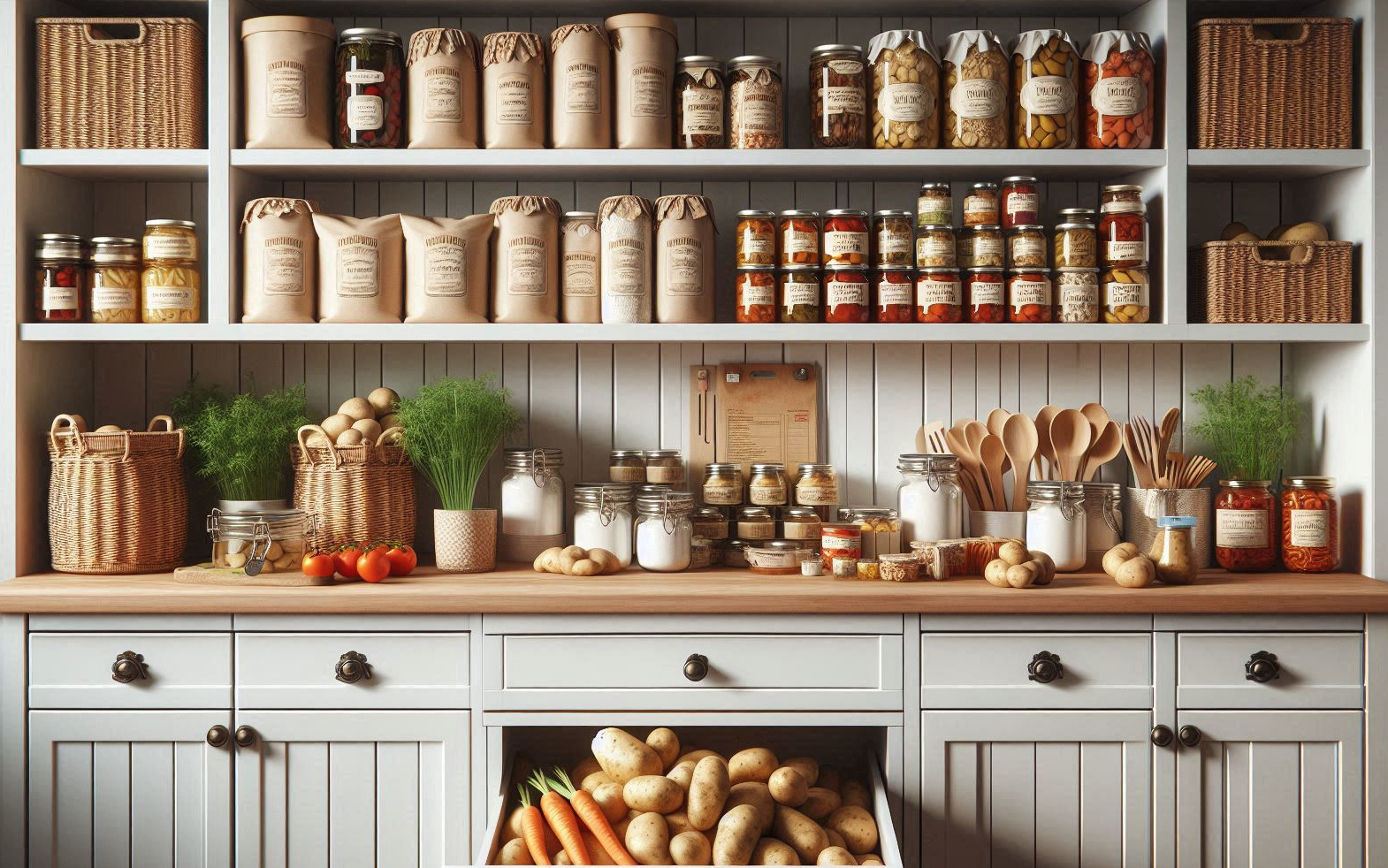
The Modern Kitchen Requirements
Today’s kitchens have transcended their traditional role as mere cooking spaces. They now serve as dynamic hubs for creativity, family gatherings, and even entertainment. Recognizing this evolution, prioritizing thoughtful storage solutions becomes paramount during the kitchen design process.
Optimising Storage for Functionality and Aesthetics
Effective storage is crucial for both the functionality and aesthetic appeal of your kitchen. Ideally, dedicating a separate room, such as a walk-in pantry, for non-perishable goods is best. If you have a cellar, use it to store perishable items that require cool temperatures. However, if these options aren’t feasible, meticulous planning and careful organisation within the kitchen itself are essential. The location of a pantry cabinet or a larder within your kitchen is very important; use cooler, well-ventilated areas. A professional kitchen designer can help you assess your requirements.


Understanding Your Food Habits and Lifestyle
Before diving into specific storage solutions, it’s crucial to understand your unique needs.
- Dietary Preferences: Are you vegetarian, vegan, paleo, or do you embrace specific dietary restrictions? This significantly influences the types of food you store and the required storage space.
- Cooking Style: Do you primarily cook from scratch, rely heavily on prepared meals, or enjoy baking? Your cooking style dictates the frequency and volume of your food purchases.
- Family Size and Eating Habits: Consider the number of people in your household, their ages, and their eating habits. Are you a frequent entertainer?
- Grocery Shopping Frequency: Do you prefer weekly big shops, smaller more frequent trips, or online grocery delivery? This impacts the volume of food you typically store at home.
- Sustainability Goals: Are you interested in reducing food waste, minimising packaging, or incorporating sustainable circular economy kitchen solutions? This may involve minimising food waste through proper storage, composting food scraps, and embracing a “use it up” mentality.
Analysing Your Food Storage Needs
Creating a detailed food inventory is the foundation for effective kitchen storage.
- Categorise Your Food: Divide your food into categories like staples, canned goods, fresh produce, dairy, meat, frozen foods, beverages, and pantry items.
- Assess Quantity and Shelf Life: Determine the quantity of each food item you typically store and its shelf life.
- Consider Special Needs: Account for any specific storage needs, such as:
- Temperature-sensitive items: Foods requiring refrigeration, freezing, or cool, dry storage.
- Bulk items: Large quantities of grains, flour, or other dry goods.
- Perishables: Fresh produce, dairy, and meat that require careful handling and rapid turnover.


Designing Your Kitchen Storage
- Prioritise Accessibility: Place frequently used items within easy reach. Utilise pull-out shelves, lazy Susans, and drawer dividers to maximise space and accessibility.
- Optimise Vertical Space: Utilise wall space with hanging racks for pots and pans, shelves, and ceiling-mounted storage.
- Incorporate Smart Storage Solutions:
- Adjustable Shelving: Customisable shelves to store items of various sizes.
- Door-Mounted Racks: Utilising the back of pantry doors for additional storage.
- Pull-Out Shelves and Drawers: Enhancing accessibility and visibility of pantry items.
- Overhead and Under Shelf Storage: Using overhead bins and under-shelf baskets for extra storage.
- Stackable Solutions: Going vertical with stackable baskets, bins, and containers.
- Lazy Susans: Rotating trays for easy access to items in deep or corner areas.
Embrace Technology:
- Smart Refrigerators: Some models feature internal cameras, inventory tracking, and even expiration date reminders.
- Automated Dispensers: Consider automated dispensers for beverages, snacks, or even pet food.
- Smart Pantry Systems: Explore innovative pantry systems with integrated sensors that monitor stock levels and suggest replenishment.
Incorporate Sustainable Solutions:
- Reusable Containers: Opt for glass jars, reusable bags, and airtight containers to reduce waste.
- Composting: Implement a composting system to minimise food waste within a circular economy kitchen.
- Vertical Gardens: Consider incorporating a seed sprouter/germinator or a vertical garden within your kitchen to grow fresh produce.
- Create a “Command Centre”: Designate a dedicated area for grocery lists, recipe books, and other kitchen essentials. Use smart speakers to add items to your shopping list and share the list with your family. I use Google speaker and Keep Notes on my Android phone.


Key Considerations for Kitchen Renovation
- Consider Customisation: Explore custom cabinetry solutions to perfectly fit your unique storage requirements.
- Invest in Quality: Choose durable and high-quality storage solutions that will last for years to come.
- Consult with a Kitchen Designer: A professional kitchen designer can help you assess your needs, maximise space, and select the most appropriate storage solutions.
Bonus
Here is a broad, but not exhaustive, list of food items:
- Staple Foods: rice, pasta, oats, barley, dry beans, and pulses
- Canned Goods: canned meats and fish, vegetables, fruits, soups, and stews
- Food in Jars and Condiments: preserves, pickles, ferments
- Cooking Essentials: cooking oils and fats, salt, sugar, honey, stock, spices, and herbs
- Breakfast Cereals
- Baking Essentials: flour, baking powder, rye flour for sourdough starter, gluten-free options
- Long-Lasting Fresh Foods: potatoes, onions, carrots, apples
- Drinks: water, coffee, tea, powdered milk, sports drinks for electrolytes
- Dry Fruits, Seeds, and Nuts: raisins, seeds, nuts, seeds for sprouting
- Fresh Produce and Eggs
- Frozen Supplies
- Pet Food